

Lent & Easter Resources
What Is Lent?
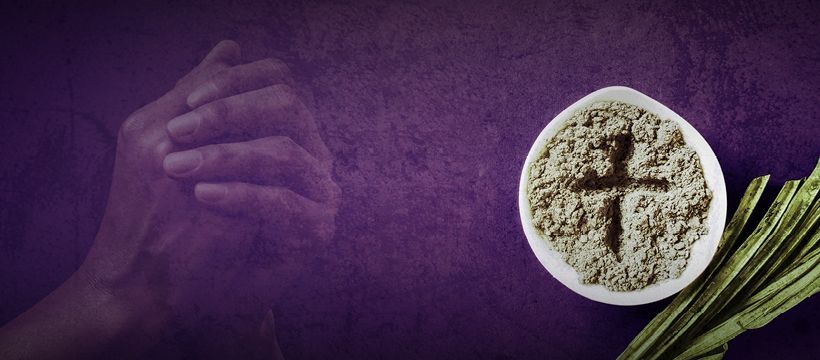
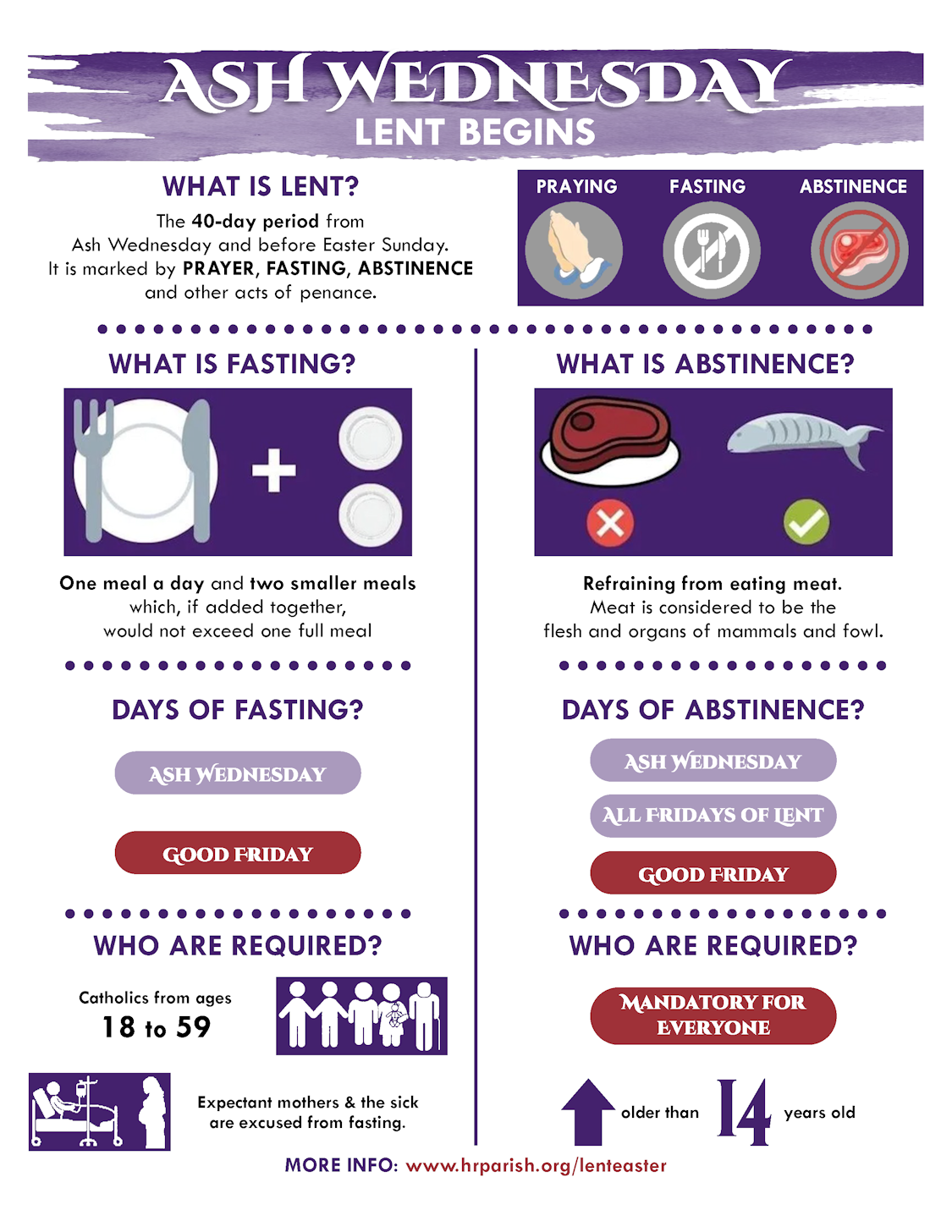
Lent is a 40-day season of prayer, fasting and almsgiving that begins on Ash Wednesday and ends at sundown on Holy Thursday. It’s a period of preparation to celebrate the Lord's Resurrection at Easter. During Lent, we seek the Lord in prayer by reading Sacred Scripture; we serve by giving alms; and we practice self-control through fasting. We are called not only to abstain from luxuries during Lent, but to a true inner conversion of heart as we seek to follow Christ's will more faithfully. We recall the waters of baptism in which we were also baptized into Christ's death, died to sin and evil, and began new life in Christ.
Many know the tradition of abstaining from meat on Fridays during Lent, but we are also called to practice self-disciple and fast in other ways throughout the season. Contemplate the meaning and origins of the Lenten fasting tradition in this reflection. In addition, the giving of alms is one way to share God's gifts—not only through the distribution of money, but through the sharing of our time and talents. As St. John Chrysostom reminds us: "Not to enable the poor to share in our goods is to steal from them and deprive them of life. The goods we possess are not ours, but theirs" (CCC 2446).
In Lent, the baptized are called to renew their baptismal commitment as others prepare to be baptized though the
Order of Christian Initiation of Adults (OCIA), a period of learning and discernment for individuals who have declared their desire to become Catholic.
Pray. Fast. Give.
Why Do We Pray?
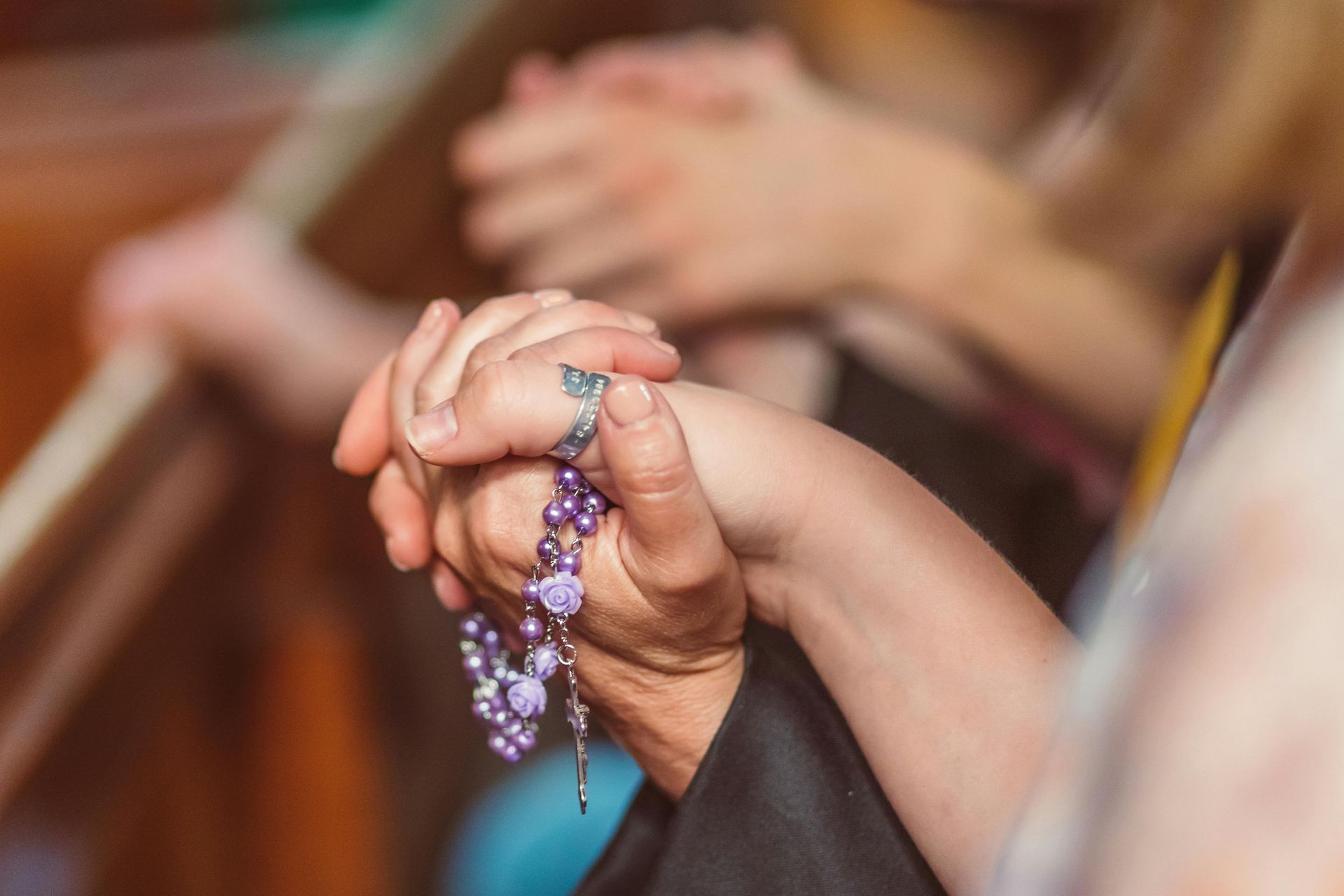
As Catholics, we believe that personal prayer is not complete unless our prayers are joined with the community of faith who is the living Body of Christ. The Sunday liturgy is the greatest form of prayer because together we receive the gift of the Holy Eucharist—the very real presence of the Risen Christ. Attending weekly (or daily) Mass is an essential part of a healthy prayer life.
Throughout the season of Lent, we are called to deepen our prayer life. For some of us, this means beginning a habit of daily prayer, setting aside time each day to share our hopes, joys, fears and frustrations with God. Praying first thing in the morning, while the house is still quiet, or talking to God while on your commute to work are simple ways to integrate prayer into everyday life. Praying the Rosary, visiting the Blessed Sacrament in Adoration or attending a daylong silent retreat may bring you to new places in your relationship with God.
Why Do We Fast?
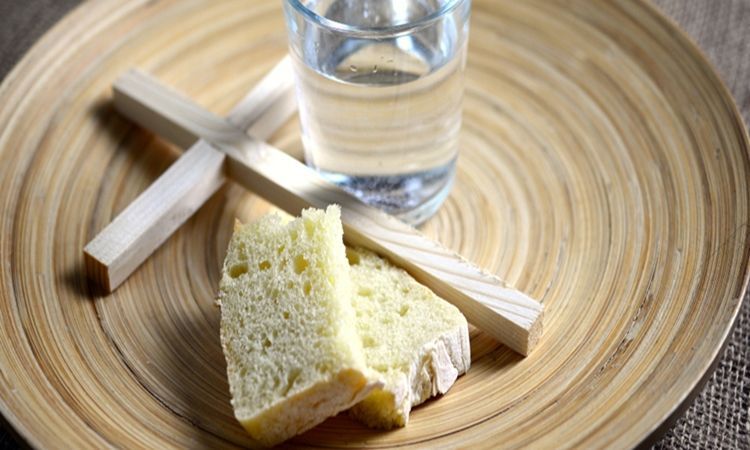
Lent has traditionally been the season where we give something up, often sweets or a favorite food, in order to focus on the sacrifice Christ made on the cross. But fasting is much more than a means of developing self-control. Fasting is spiritual and physical purification; the pangs of hunger remind us of our hunger for God. Fasting and abstinence help us to participate more fully in the cross of Christ.
Church Guidelines for Fasting and Abstinence
The law of abstinence obliges those 14 years of age and older not to eat meat on Fridays throughout the season of Lent as well as on Ash Wednesday. The law of fast obliges all those from ages 18 through 59 to refrain from eating between meals and to limit their eating to one full meal and two lighter meals on Ash Wednesday and Good Friday.
Lent is a time to fast from those things or habits that may have become a roadblock to our relationship with Christ.

Why Do We Give Alms?
Charitable giving is a very ancient practice. Almsgiving was the standard long before the time of Jesus. The Lenten call to almsgiving means making the needs of other people our own. One of the central lessons of the cross is compassion. The heavy burdens we carry help us to appreciate the suffering in others. Sharing our material goods is often just the beginning of real Christian giving. We are also called to share our time tending to people in need.
Lent is a time to prepare for Easter; it is a necessary prelude. The sacrificial practices of Lent prepare and purify us in body, mind and spirit for the passion of our Lord and Savior, Jesus Christ.
Ideas for Fasting
New Ways to Fast
- In the Western world, fasting from food is a reminder of our abundance and a way to walk in solidarity with people around the world who struggle with daily hunger and starvation. Pause to remember families that face hunger as you fast.
- Limit social media exposure or fast from your favorite app.
- Shut off the 24-hour news. This is a good way to quiet our minds and open our hearts to transformation.
- We might also strive to fast from anger, road rage, workaholism, judgment or jealousy.
- Consider giving up modern conveniences like your dishwasher, microwave or the elevator.
- Give up unnecessary shopping or dining out.
Outside-the-Box Ideas for Giving
- Volunteer at a neonatal center, giving premature babies a human touch
- Tutor a child or English language learner
- Mentor a college graduate
- Increase your donation to your local parish
Stations of the Cross
Could you walk a mile in Jesus’s shoes?
The Stations of the Cross bring us closer to Christ as we meditate on the great love He showed for us in His most sorrowful Passion! You can pray the Stations of the Cross (also known as the Way of the Cross) alone at any time, but people most often pray them in a group setting on certain nights during Lent.
Tradition traces this loving tribute to our Lord back to the Blessed Mother’s retracing her son’s last steps along what became known as the Via Dolorosa (the Sorrowful Way) on His way to His Crucifixion at Calvary in Jerusalem. Pilgrims to the Holy Land commemorated Christ’s Passion in a similar manner as early as the 4th century A.D. The Stations of the Cross developed as a devotion in earnest, however, around the 13th to 14th centuries. It became a way of allowing those who could not make the long, expensive, arduous journey to Jerusalem to make a pilgrimage in prayer, at least, in their church! Although the original number of stations varied greatly, they became fixed at 14 in the 18th century.
The Stations of the Cross themselves are usually represented in churches by a series of 14 pictures or sculptures covering our Lord's Passion. They are meant to be “stopping points” along the journey for prayer and meditation.
Although there are variations on this list below, these 14 scenes are taken from St. Alphonsus Liguori’s well-known setting of the Stations in prayers, his Way of the Cross:
1. Jesus is condemned to death.
2. Jesus carries His cross.
3. Jesus falls for the first time under His cross.
4. Jesus meets His sorrowful Mother.
5. Simon of Cyrene helps Jesus to carry His cross.
6. Veronica wipes the face of Jesus.
7. Jesus falls for the second time.
8. The women of Jerusalem weep over Jesus.
9. Jesus falls for the third time.
10. Jesus is stripped of His garments.
11. Jesus is nailed to the cross.
12. Jesus dies on the cross.
13. Jesus is taken down from the cross.
14. Jesus is laid in the Tomb.
In between each Station, in addition to saying the Our Father, Hail Mary and Glory Be, congregations often sing verses from Stabat Mater, a moving hymn about the Blessed Mother’s sorrow at her son’s Passion.
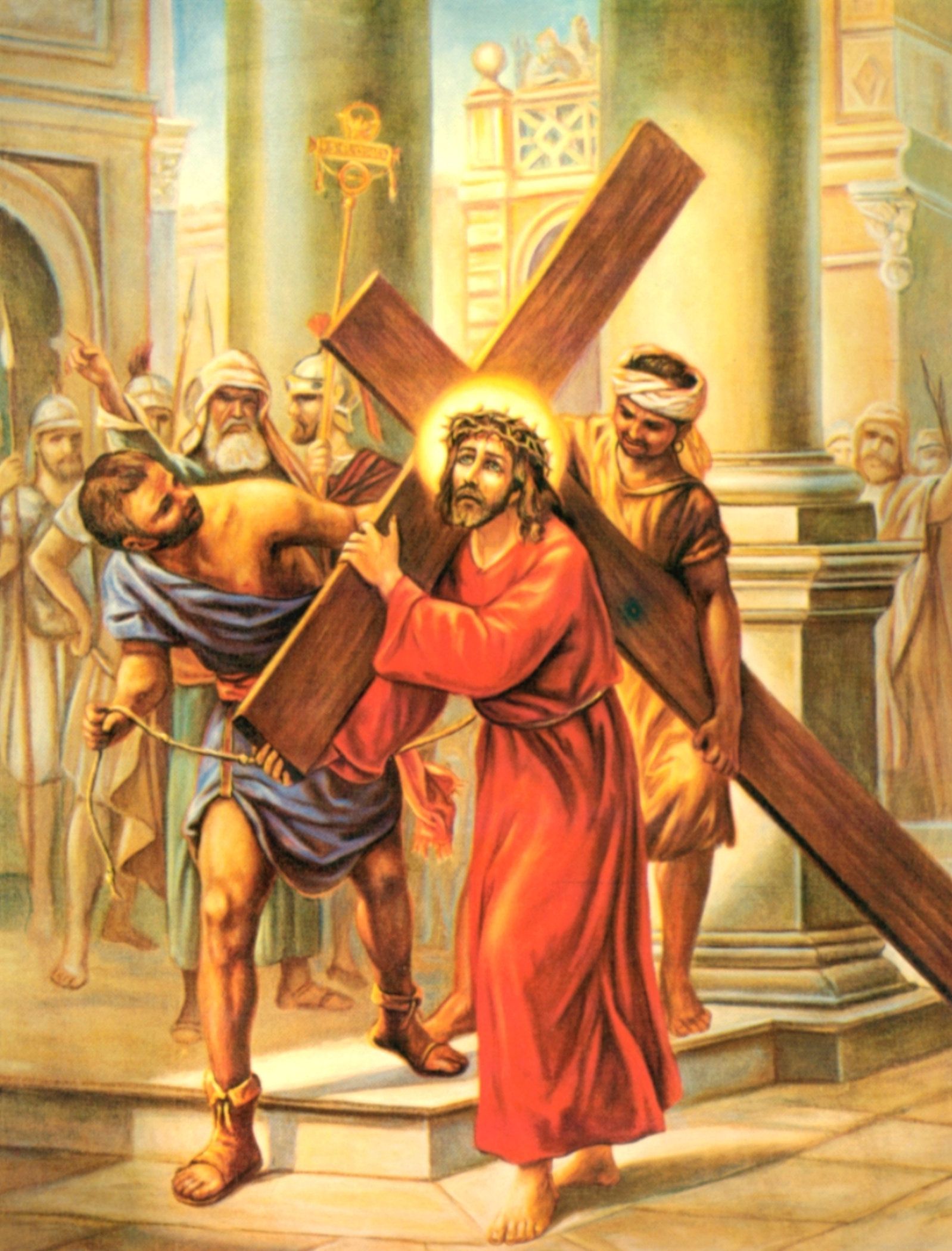
The Stations of the Cross provide us with great material for prayer and meditation. Tracing Jesus’s journey from condemnation to crucifixion increases both our sorrow for our sins and our desire for His help in avoiding temptations and in bearing our own crosses. Meditating on Christ’s passion can help us become more like Him in imitating His virtues of obedience, humility, charity, patience and perseverance.
Remember that Easter Sunday always follows Good Friday! Just as our Lord’s Passion was followed by His resurrection, so too, as St. Paul said, through His grace we can be His heirs, “if we suffer with Him that we may also be glorified with Him” (Rom 8:17).
At Holy Rosary, the Stations of the Cross are prayed each Tuesday (English) & Wednesday (Spanish) during Lent in the Church at 6:30pm.
Holy Week

Palm Sunday
This commemorates Christ’s triumphant entry into Jerusalem ahead of the Passover celebration.
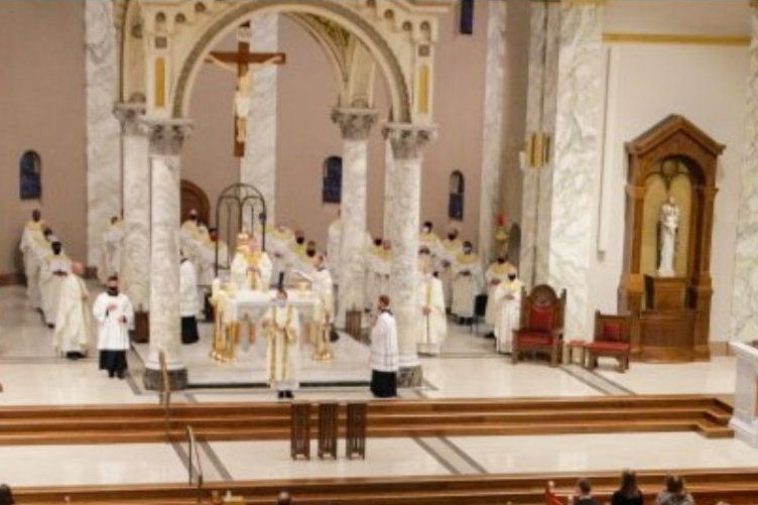
Tuesday: Chrism Mass
The Chrism Mass is annually hosted by St. Benedict Cathedral, 1328 Lincoln Ave, and includes blessing and consecration of holy oils and the renewal of priestly promises.

Wednesday: Cena Pascual
Break bread together at a symbolic Seder Meal, while witnessing a theatrical presentation of the Last Supper, shared by our Hispanic Ministry.
The Easter Triduum
The summit of the Liturgical Year is the Easter Triduum—from the evening of Holy Thursday to the evening of Easter Sunday. Though chronologically three days, they are liturgically one day unfolding for us the unity of Christ's Paschal Mystery. The single celebration of the Triduum marks the end of the Lenten season and leads to the Mass of the Resurrection of the Lord at the Easter Vigil. The liturgical services that take place during the Triduum are:
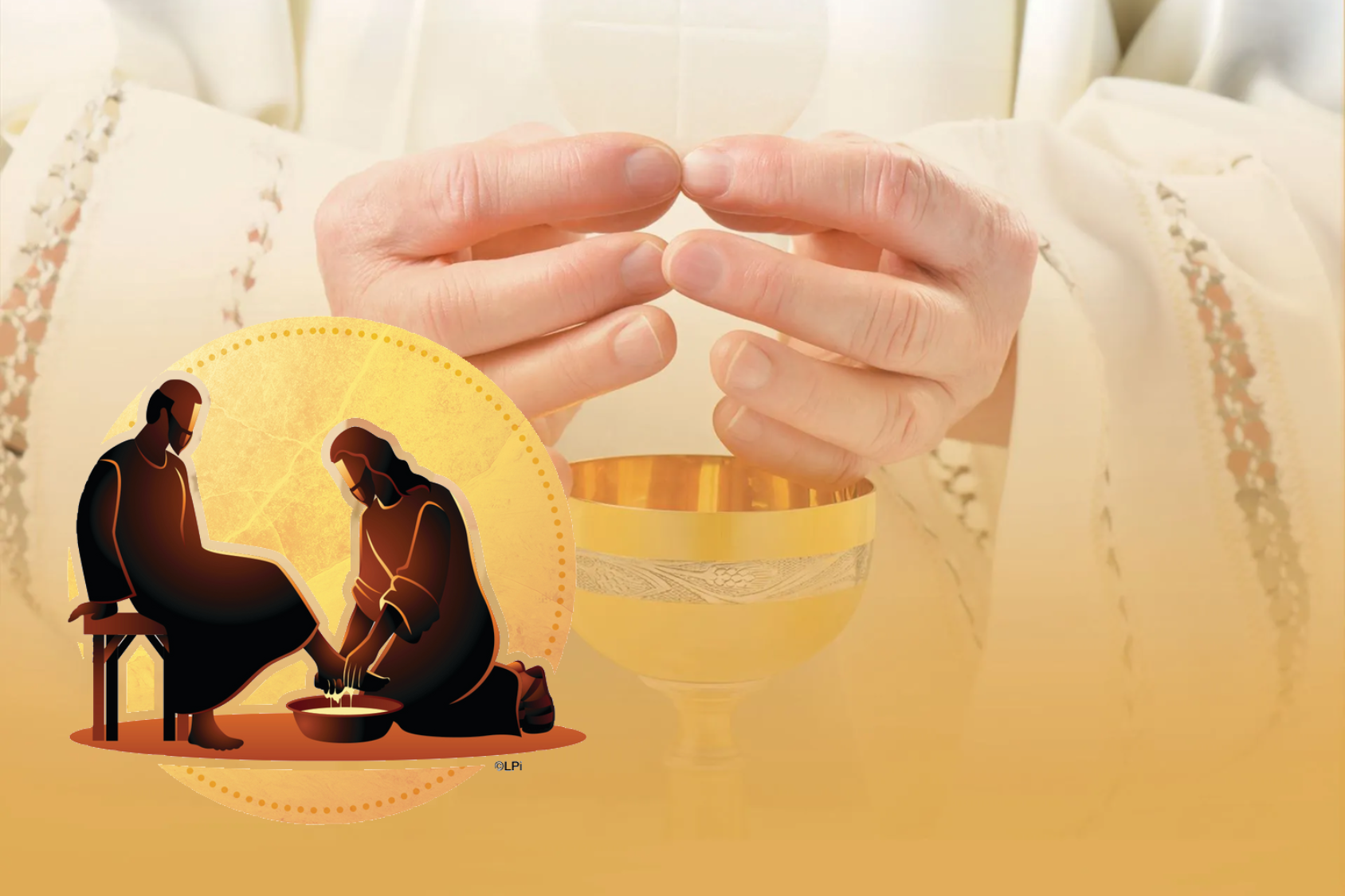
Holy Thursday
Mass of the Lord's Supper
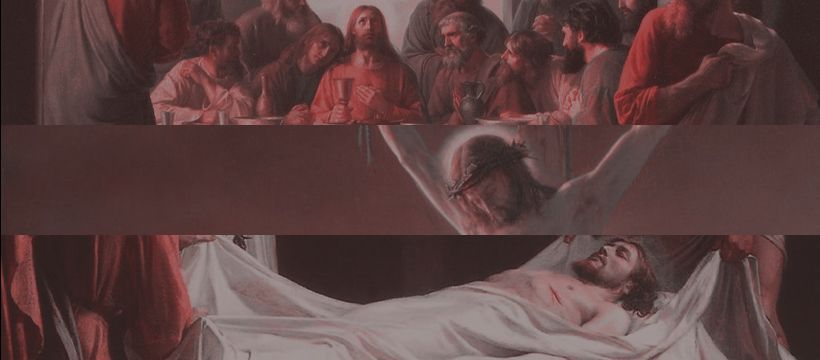
The Mass on Holy Thursday is commonly known as the Feast of the Lord’s Supper. This Mass is a time for Catholics to remember the Last Supper where Jesus and His apostles gathered to celebrate Passover.
In the Holy Thursday celebration, two ritual actions stand out among the rest:
The Washing of the Feet
At the Last Supper, Jesus took a basin and a towel, got down on His hands and knees and washed the feet of all of His apostles. After this action, He commanded the apostles, “I have given you a model to follow, so that as I have done for you, you should also do” (John 13:15). This is Jesus’ commandment: Just as Jesus has been a servant to His apostles, so the apostles must go out into the world and be servants to everyone around them.
The ritual washing of the feet can take place in many ways. Most churches choose to have 12 people, who represent the apostles, have their feet washed by the priest presiding over the celebration. The ritual of the foot washing should always be a reminder that Christ has called us to be servants to the entire world.
The Celebration of the Eucharist and the Eucharistic Procession
At the very first Last Supper, Jesus also instituted the Eucharist for the Church. At this Holy Thursday celebration, we are reminded of who we are in Jesus Christ and that, through the sacrament of the Eucharist, we are and we become even more the Body of Christ together.
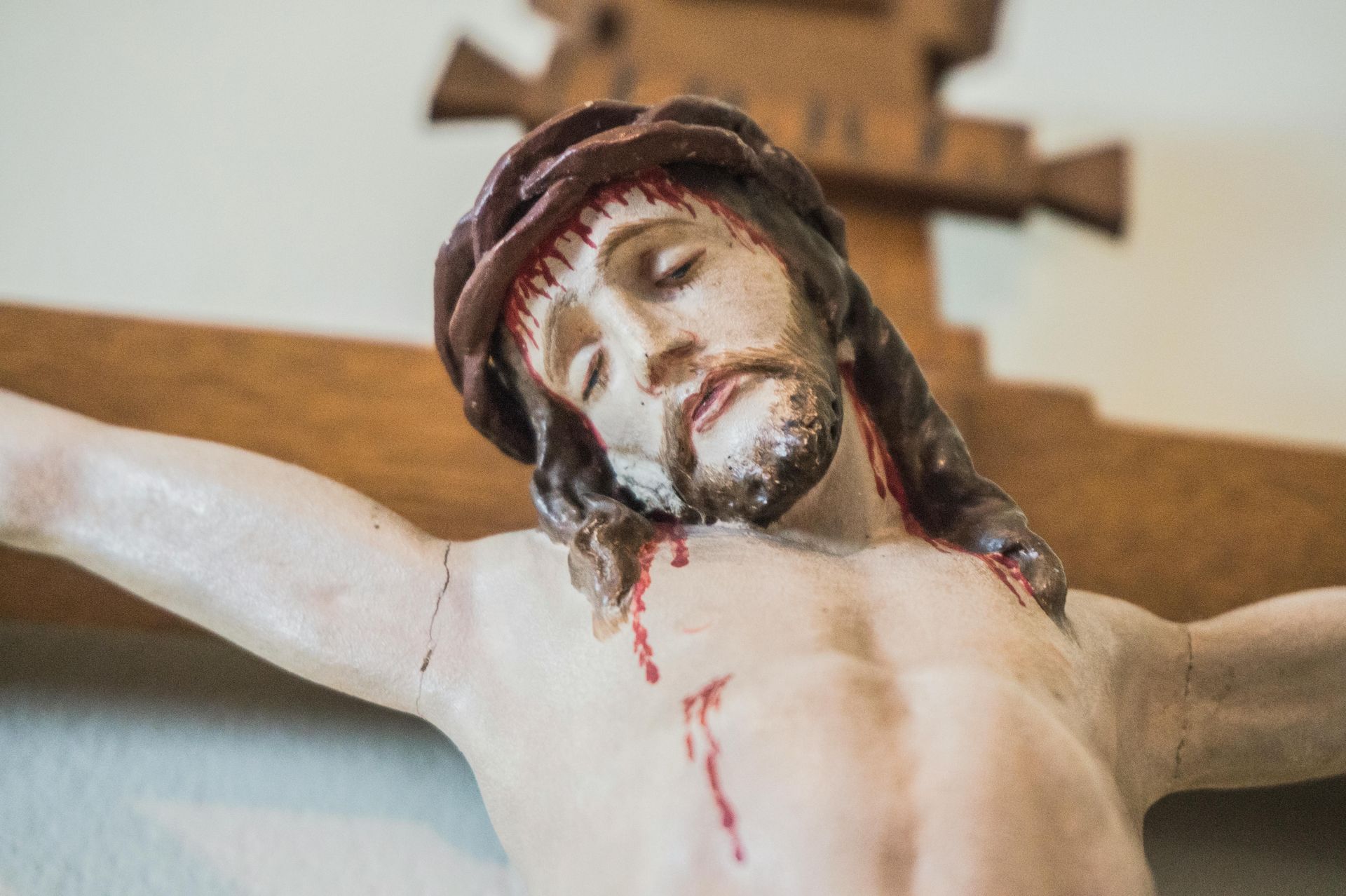
Good Friday
of The Lord's Passion
In this solemn celebration, we remember the Passion and Death of Our Lord. The service is marked by several important rituals including the proclaiming of the Passion according to John, the Veneration of the Cross, an extended form of General Intercessions and, finally, the distribution of Communion (reserved from the Holy Thursday celebration of the Eucharist).
The Veneration of the Cross
It seems strange that in the Good Friday liturgy Catholics choose to venerate, or show reverence to, the very instrument that was used to crucify Jesus. The Veneration of the Cross reminds us that through this Cross, the Glory of the resurrection emerges. So, on Good Friday, we come forward to show our great reverence and respect for the Cross. People have various traditions when they approach the Cross. Sometimes they kiss the Cross, kneel before the Cross or even just touch it in some fashion. As you participate in this ritual, venerate the Cross in whatever way feels most normal. And most of all, just take in the experience of the gathered community coming so close to such a tragic, but integral, event in our faith.
The General Intercessions
In this expanded form of General Intercessions, the presider and the deacon work together to pray 10 intercessions. These intercessions are the same intercessions the entire Church prays on Good Friday, and they include praying for the Holy Church, the Pope, all orders and degrees of the faithful, Catechumens, the unity of all Christians, the Jewish people, for those who do not believe in Christ, for those in public office and for those in tribulation. These prayers recognize how universal our Church is and that we should be aware of all of the faiths and traditions in the world that are different from our own.
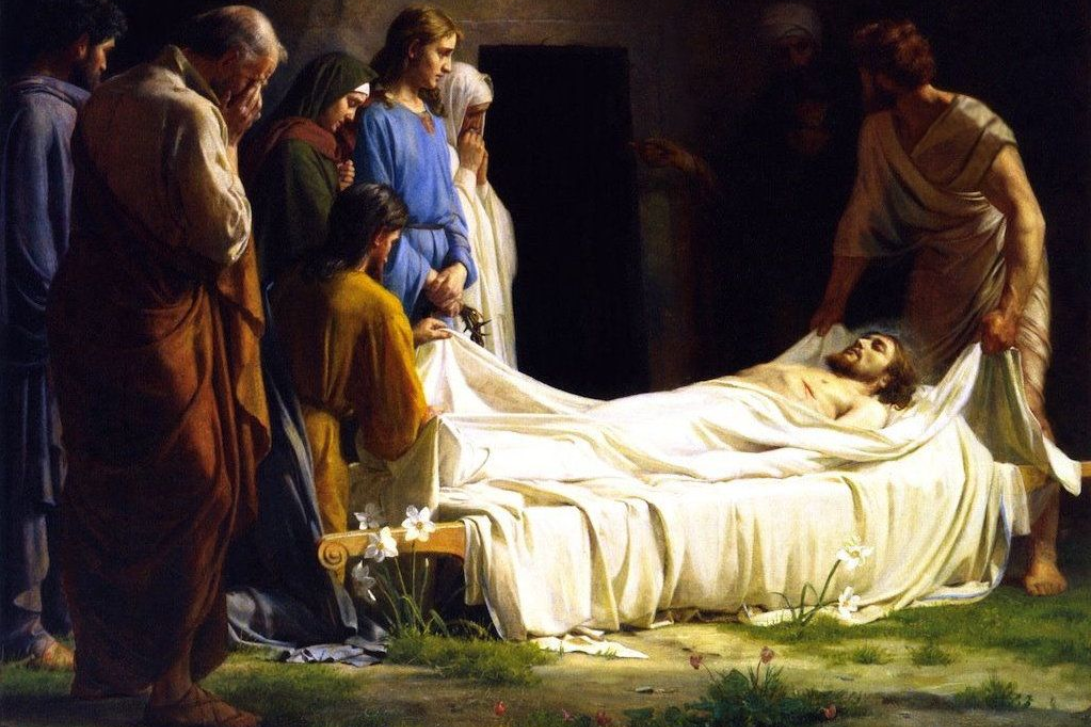
Holy Saturday
Mass of the Resurrection of the Lord
The celebration of the Easter Vigil tells the whole story of our salvation—from creation to resurrection and beyond. The Easter Vigil includes the lighting of the Easter Fire and Paschal Candle, the singing of the Exsultet, the expanded Liturgy of the Word that traces time through Salvation History, the Liturgy of Initiation and the celebration of the Holy Eucharist. All these rituals come together for one purpose: to remember and recall the saving deeds of our God on our behalf. Here’s an explanation of two moments from the celebration:
The Singing of the Exsultet
The Exsultet, or the Easter Proclamation, is a hymn that is sung by a deacon, priest or cantor. This hymn speaks of how God has interceded in our lives on our behalf. The Exsultet especially recalls the Holy Night when Jesus Christ rose from the dead. What makes this moment particularly dramatic is that the Exsultet is sung in a church lit only with the light of the Paschal Candle and other smaller candles, which people are holding. In order to pray this hymn along with the deacon, priest or cantor, try reflecting on the words of the hymn throughout Holy Saturday.
The Liturgy of the Word
The Liturgy of the Word for the Easter Vigil is comprised of nine readings and seven responsorial psalms. The first reading begins with the story of Creation and then, each subsequent reading recounts the story of our faith lives through history. You’ll hear the story of Isaac and Abraham, the story of Moses and the Exodus and more. All of these readings lead up to the singing of the Gloria when all the lights come on in the church, and then the final reading, the Resurrection of Christ, is proclaimed. Why so many readings? Again, like the singing of the Exsultet, the readings recount the many ways in which God has interceded on our behalf throughout history. Most churches do not do the entire set of nine readings for time’s sake. But keep in mind that the point is to recall how God has interceded on humanity’s behalf from the very beginning of time and that through this Easter Vigil we celebrate that God is present and always working in our lives, even still today.
The Reception of the Sacraments
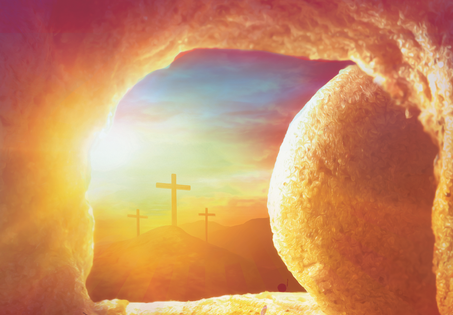
Easter Sunday
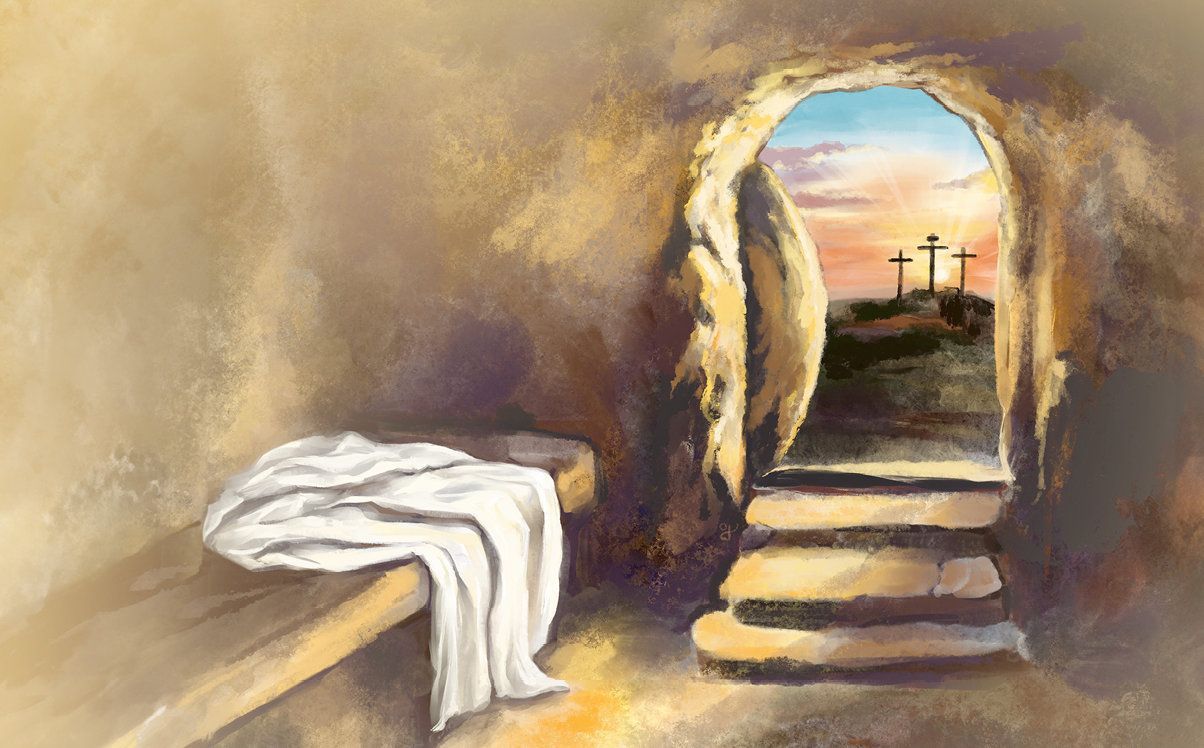
On Easter Sunday we celebrate the
Mass of the Resurrection of the Lord.